
Thursday, 18 December 2014
Another Buddhist Publication Steals Another One of My Articles

Tuesday, 16 December 2014
When Budgets Run Into the Millions
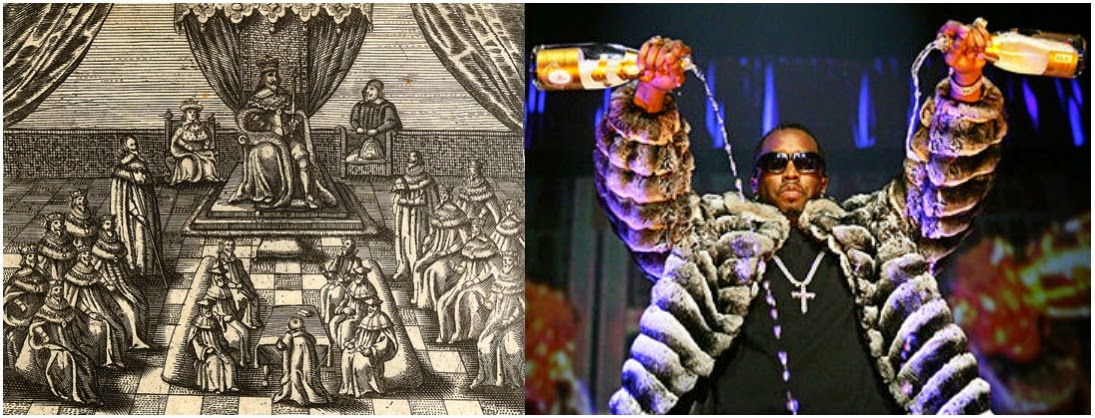
The House of Lords has 790 members (not all of whom participate regularly, but we leave that aside). The budget seems to allow for more than six bottles of Champagne per member, per annum.
Last year, here at the University of Victoria, more than $5.3 million dollars were spent on office supplies in a single year. I do not know if that number includes Champagne. Don't believe me? See the screenshot [below], or check the numbers yourself (they're publicly available, as with the accounting for any charity registered in Canada).
Monday, 15 December 2014
Buddhism and/or/as/vs. Politics (Discussion)

http://asiapacific.anu.edu.au/newmandala/2014/12/16/blind-spot-in-buddhist-studies/
On Youtube: Kang Youwei's Utopia & Mao's Revolution

大同書: Kang Youwei's Utopia & Mao's Revolution (康有為 & 毛澤東)
What was the philosophy of Datong (大同) anyway? Kang Youwei (康有為) was both an important influence on Communists and anti-Communists in China's 20th Century.
On Youtube: http://youtu.be/BvVdBhR8fgs
Read more if you want to know more: a-bas-le-ciel.blogspot.com/2014/12/Kang-Youwei-Saneatsu-Mushanokoji-Mao-Zedong.html
Sunday, 14 December 2014
The Dream is Dead, The Dreamer Remains
One of the peculiar but pervasive effects of Google on my life is
this: I use some turn-of-phrase and then wonder if I'm quoting
someone without realizing it. Here, in response to the question of what motivated my
past work on Buddhism, I conclude with the quip, "That dream is dead. The
dreamer remains."
 Was I remembering a line from some other source? Was I saying something that ten different authors have said before? According to Google, no, it's original. I'm left with the feeling that Google can't be trusted (somebody must have said it somewhere, after all).
The article the stranger was responding to happened to be this one (Mind and the Material Elements, in large part a critique of Richard Gombrich & Alex Wynne).
The article the stranger was responding to happened to be this one (Mind and the Material Elements, in large part a critique of Richard Gombrich & Alex Wynne).
Saturday, 13 December 2014
Putting my own name into Google Books search

It still is available from Medium, but that website changed the way that one story links to another, and so you'd now need to be able to find the following page (within this blog) in order to really read the thing: http://a-bas-le-ciel.blogspot.ca/2014/03/canon-and-reason-complete-chinese.html
Every so often, I do see indications that people are (still) reading and responding to that essay, but I also notice that they seem to be sharing old PDF versions of it (apparently unaware of the other formats, still using an incomplete Chinese translation… and who can blame them?).
So, Google Books will be an experiment, perhaps resulting in an easier-to-find (and easier to use) format, perhaps not.
As the thing is now supposedly available online under the title 南傳佛教研究中的“經典”與“理性”問題, I tried searching Google Books to find it. No salient results (yet). So, I then tried searching for my own name.
Friday, 12 December 2014
On the Ostensible Sources of Mao Zedong's Utopia: Kang Youwei & Saneatsu Mushanokoji

The Young Mao was influenced by Kang Youwei's The Great Harmony and the Japanese warrior Mushanokoji Saneatsu's New Village (Atarashikimura) Movement. Mao had joined with others to plan a "New Village" in Yuelushan where thinkers could work and study together and share their assets and the fruits of their labor. He had never had the opportunity to put that plan into practice.
In 1958, Mao believed the time had finally come. He had written "When Kang Youwei wrote The Great Harmony, he had not and could not have found a road to that Great Harmony." Mao believed he had found that road in the communes [of the Great Leap Forward].
(Yang, 2012, p. 170–171)
This essay provides a simple exploration of some of the ostensible sources of Mao Zedong's (毛澤東) ideology, following the cue provided by Yang Jisheng's (楊繼繩) Tombstone (quoted above).
The first and most general discovery is that the connection between Maoism and the sources discussed in this essay has attracted very little attention in the English-language evaluation of Maoist Communism. Chinese and Japanese sources are outside of the scope of this essay, but, in English at least, it seems that remarkably little attention has been paid to this aspect of the legacies of Mushanokoji (武者小路 實篤, also writ Mushakoji) and Kang Youwei (康有為, also writ K'ang Yu-Wei). Both names remain famous, but their significance for Maoism --specifically-- seems to have escaped notice in English.
Wednesday, 10 December 2014
The Era of Unpaid Authorship
 |
| A newspaper office in Bangor, Maine, 1920. |
For instance, try sending short stories to The New Yorker, which pays well. They feature one in each issue, and once a year have an all-fiction issue. Your kind of writing is very close to what they print. Alice Munro and Mavis Gallant first made a living out of writing by selling short stories to them, then book publishers wanted to collect their stories etc. I know that's a previous generation, but new writers are constantly appearing, some in books, some online, most in multiple formats.
[Anonymized]
--------------------
That world is over.
That economy no longer exists.
Alice Munro was born in 1931. Mavis Gallant was born in 1922.
I met an American in Yunnan (who was not particularly sagacious) who remarked to me, "Given the circumstances I was born into, it would have been relatively easy to become a lawyer, but difficult to become a drug-dealer". Somebody else, born and raised just a few blocks away, would have been in the reverse scenario: easily able to become a drug-dealer, but facing tremendous obstacles separating him from becoming a lawyer.
Making money out of authorship now relies on the same sort of personal connections that would give you access to a career as a drug-dealer.

If I published in the most prestigious Canadian literary magazine imaginable I would either be paid nothing at all, or else a merely-symbolic honorarium (seriously: we're talking about $50).
A full-length article for "Salon.com" (allegedly reaching 15 million readers) earns a merely symbolic payment of $150.
The famous Rolling Stone magazine pays $250 for an article of up to 1000 words.
The Washington Post pays $250 for a feature essay of up to 1000 words.
Talking to Idiots

[What's that you say? "We will take discard your work ." You certainly will, old boy, you certainly will.]
[Updated March 26th, 2015: the same website actually stole my work a second time, a few months after this absurd dialogue!]
-----(1)-----
You have stolen an article of my own authorship, that I reserve the rights to: [link omitted].
You do not have the right to have this text on your website. You should not have copied-and-pasted this content.
However, you _do_ have the right to discuss my work, and then to provide a link to the location of the article on my website (or to just provide a short notice with the link, etc.).
Here is a link to the article, as it appears on one of my own web-pages (with illustrations of my own selection, etc.).
https://medium.com/@eiselmazard/the-buddha-was-bald-a25589c26ebe
E.M.
-----(2)-----
Hi Eisel Mazard
First of all we have not stolen anything, your article as much I know its available in internet .
We thought you are a Buddhist because you wrote about the Buddha , and Buddhist usually share knowledge freely but in your case it seems totally opposite.Are you against to spread knowledge about Dharma
Secondly, usually people are happy that their work are listed in our Encyclopedia, because its probably the biggest collection of Buddhist materials in web and its just the beginning of it
We will take discard your work .
Saturday, 22 November 2014
Mongolian Democracy, Chinese Dictatorship (1989–2014)

In both symbolic and economic terms, 21st century Mongolia is defined by the railway that links Russia to China. This railway was created by a handshake between Joseph Stalin and Zhou Enlai in 1952, (Rossabi, 2005, p. 226) and it is a strategic connection that Russia and China are still competing to control today ("A new Great Game has started between China and Russia to control the direction and route of Mongolia’s railway lines," Bulag, 2010, p. 100). In this interstitial economic position, Mongolia is always in danger of coming under the overweening influence of one or the other of its two neighbors, if not both. In contrast to the Soviet period, Mongolia has effectively avoided such domination since 1989 through what we could call "a democratic gambit" that has paid off.
There have been some remarkable political events in Mongolia just within the last few months of 2014, but they are, perhaps, remarkable for being unremarkable: they affirm what Western Democracies would consider to be "normal politics", in stark contrast to what passes for normal in the rest of post-Communist Asia. Reuters reported an orderly parliamentary vote to remove the Prime Minister, with 14 days of debate ensuing to select a replacement. (Reuters, 2014) This deliberative transition-of-power may be favorably compared to recent events in the would-be democracies of Thailand, Cambodia and Myanmar (dare we say Laos?); and, of course, it is an even stranger contrast to Mongolia's immediate neighbors, Russia and China.
One quite attractive thing about the Mongolian transition [to democracy] was that we made the political and economic transitions side by side. Some skeptics say that it’s impossible to make dual transitions, political and economic transitions, in Asian countries. But Mongolians broke that stereotype. We proved that it can be done in every country, in every corner of the world; it can be done. We proved that… Imagine—just 20 years ago we had a North Korea-like society and today we are chairing the Community of Democracies… (Elbegdorj, 2011, p. 179)In asking when and how Mongolia made its transition to democracy, we have a useful metric provided by the Freedom House rankings of political rights scores. We can see at a glance in figures 1 & 2 that Mongolia underwent momentous change of some kind in the years 1989–1991, in a transition punctuated by elections in 1990 and 1992.

Subscribe to:
Posts (Atom)